The bookOut now
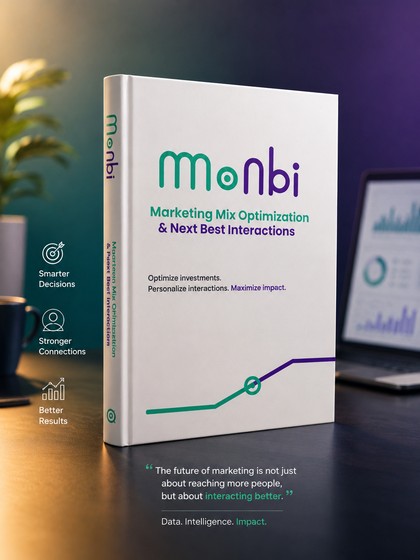
MONBI: Marketing Mix Optimization & Next Best Interactions
The whole methodology, written down: why marketing split into aggregate investment and one-to-one relationships, why that split is now a technical accident rather than a necessity, and how AI lets a single architecture hold both. Available on Amazon.
The book builds the argument from the ground up. It starts with the division that shaped the discipline — mass advertising delegated to media agencies, customer relationships kept in house — and shows that the two evolved apart for a purely technical reason: no single model could hold an aggregate view and an individual one at once.
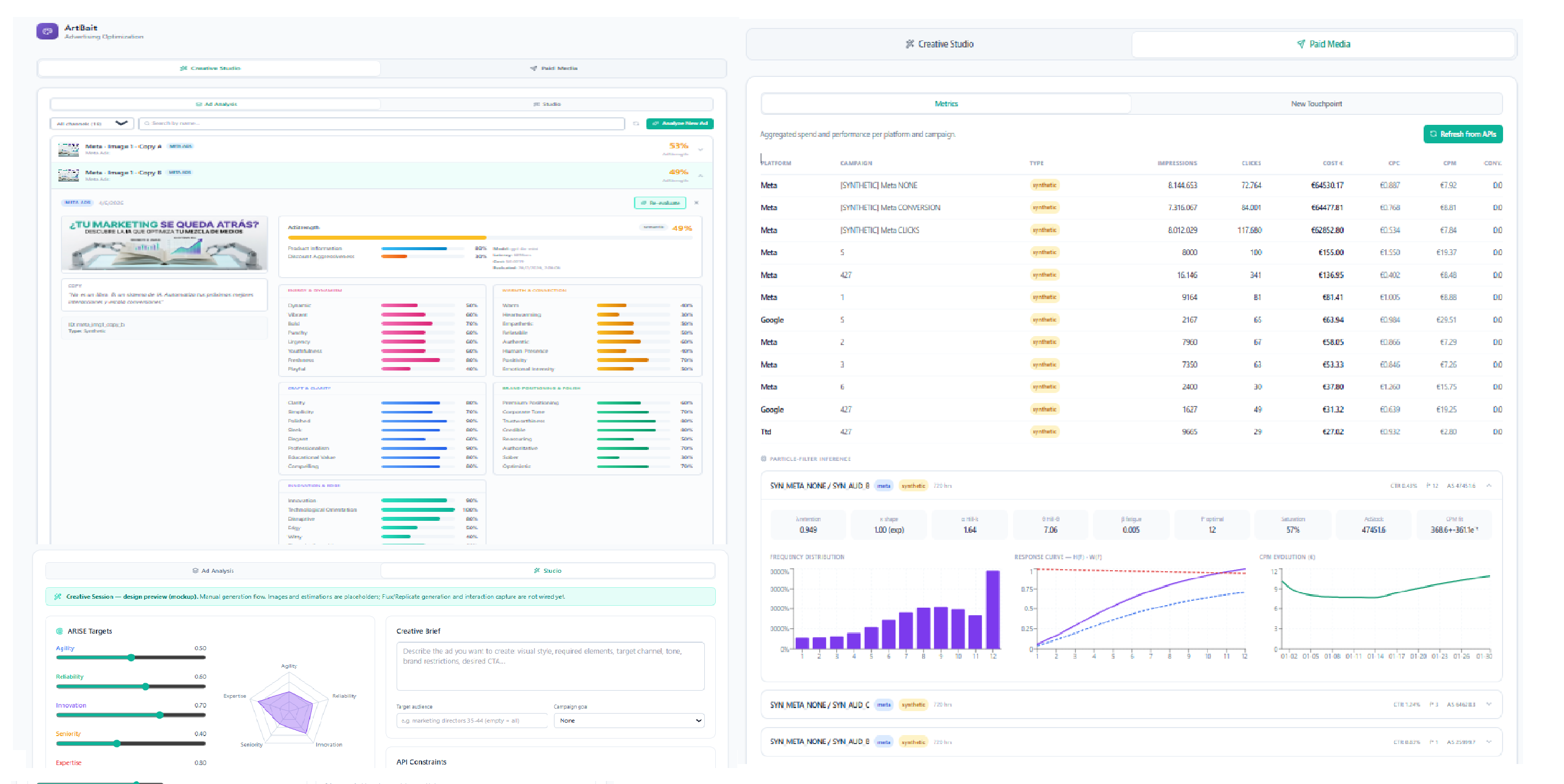
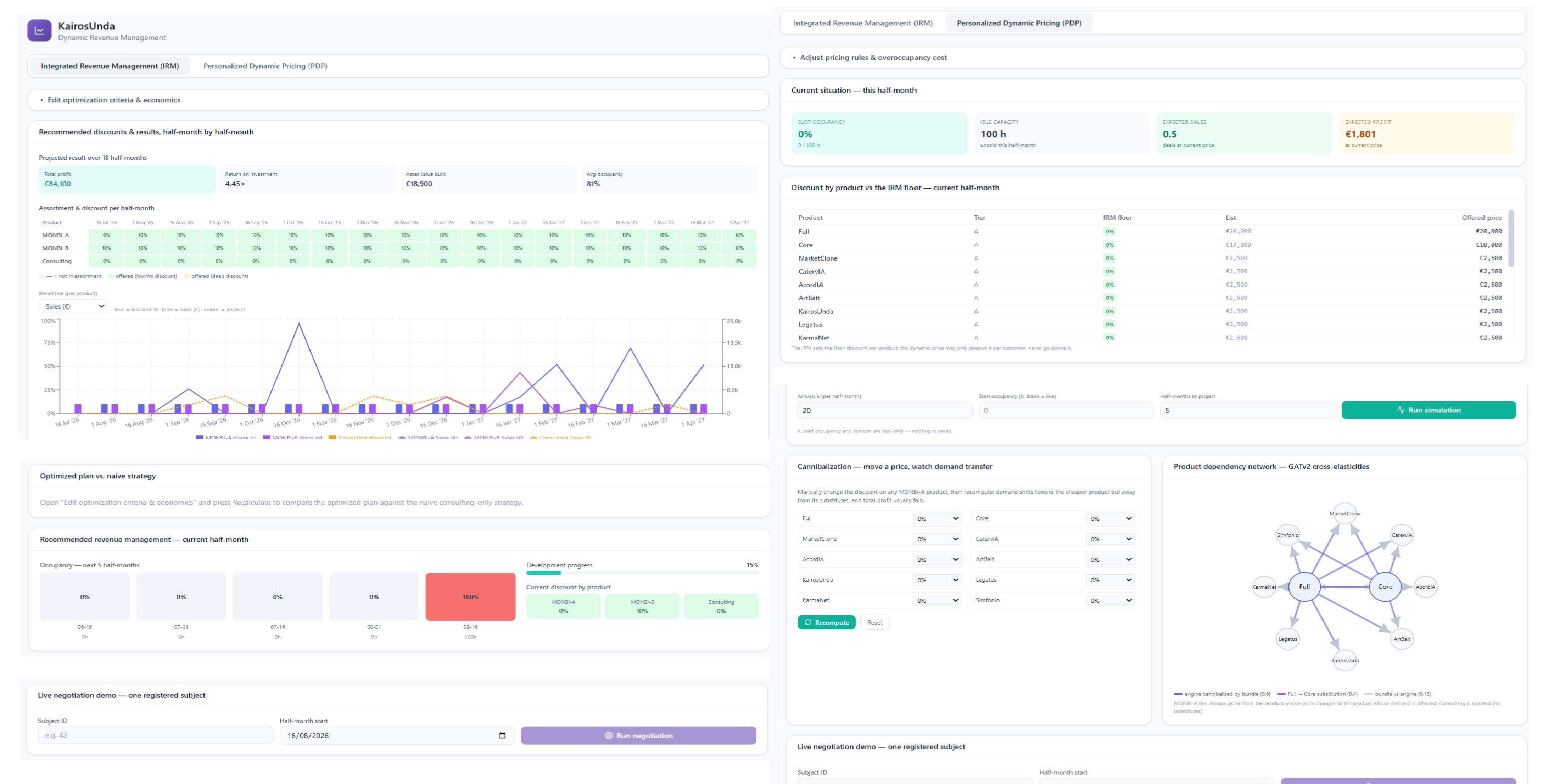
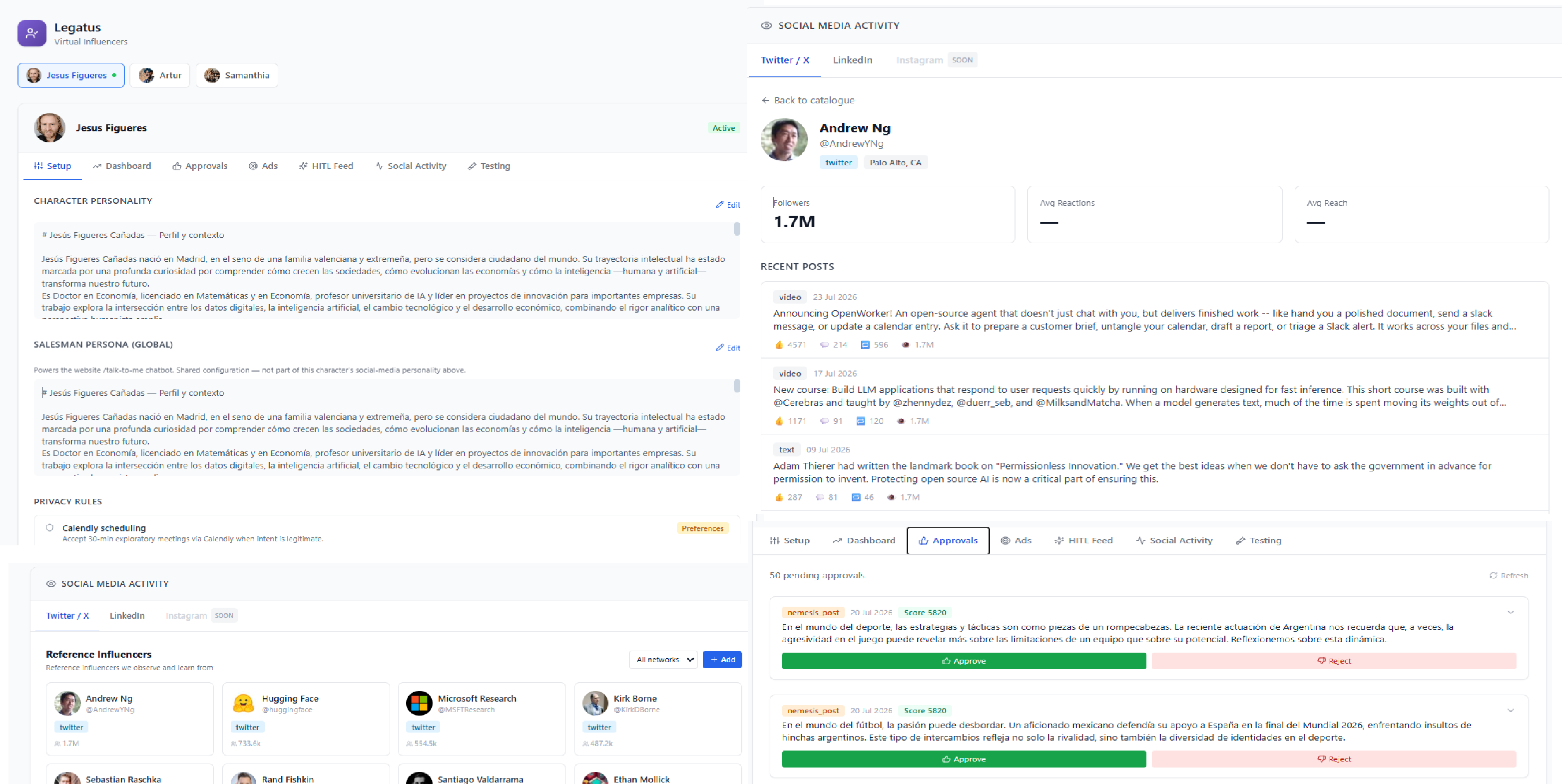
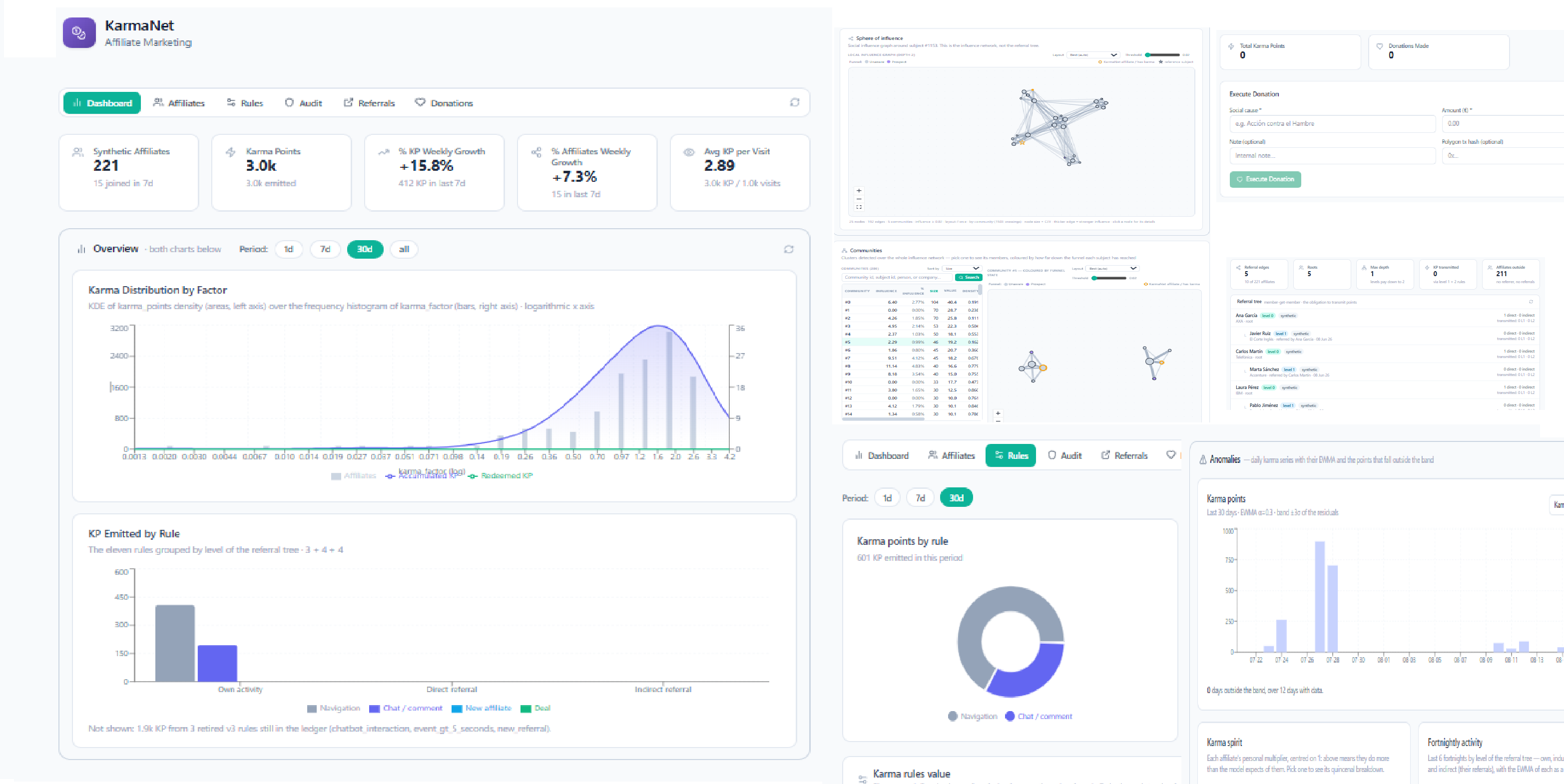
From there it develops the methodology service by service: simulating a market with synthetic populations and agent-based models, inferring the motivation behind observed behaviour, optimising the marketing mix as one system, pricing a portfolio rather than a product, treating creativity as a measurable process, deciding the next best interaction for each customer, extending brand presence through digital delegates, and turning a community into an affiliation network.
It closes on the practical part most methodology books skip: how any of this actually enters an organisation that already runs ERPs, CRMs and years of legacy — the three adoption routes, and the industry verticals the same core supports.
Methodology9 min
Econometric marketing models fit relationships between aggregate variables — and break when a new competitor, a new product or a regulatory change arrives. Why micro-founded agents generalise where curve-fitting cannot.
Read article →Simulation8 min
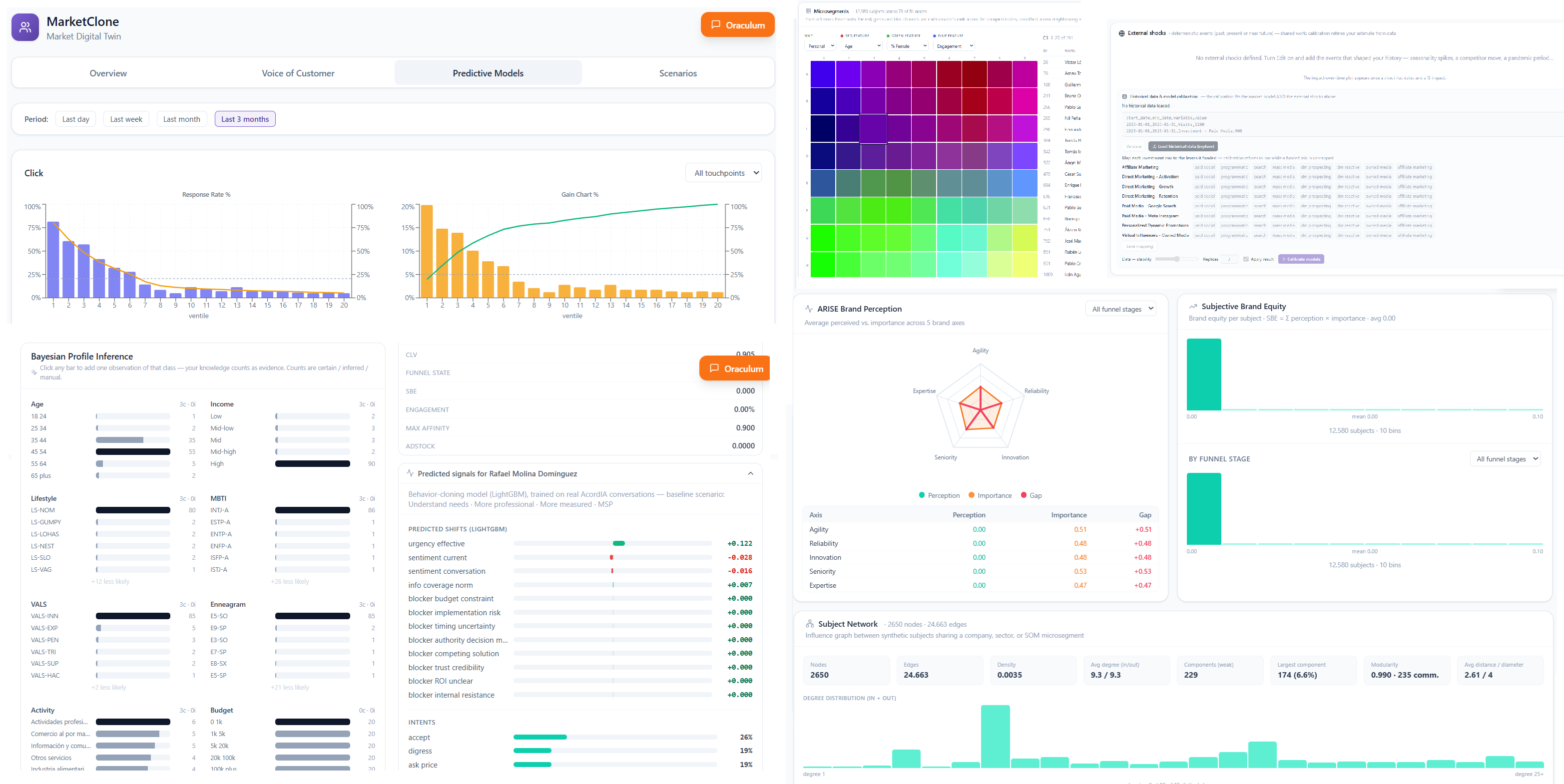
Companies know a small, biased slice of their market, but decades of research on human behaviour is stable. How MCMC, Bayesian networks, VAEs and self-organising maps turn known constraints into a plausible synthetic population.
Read article →LLMs7 min
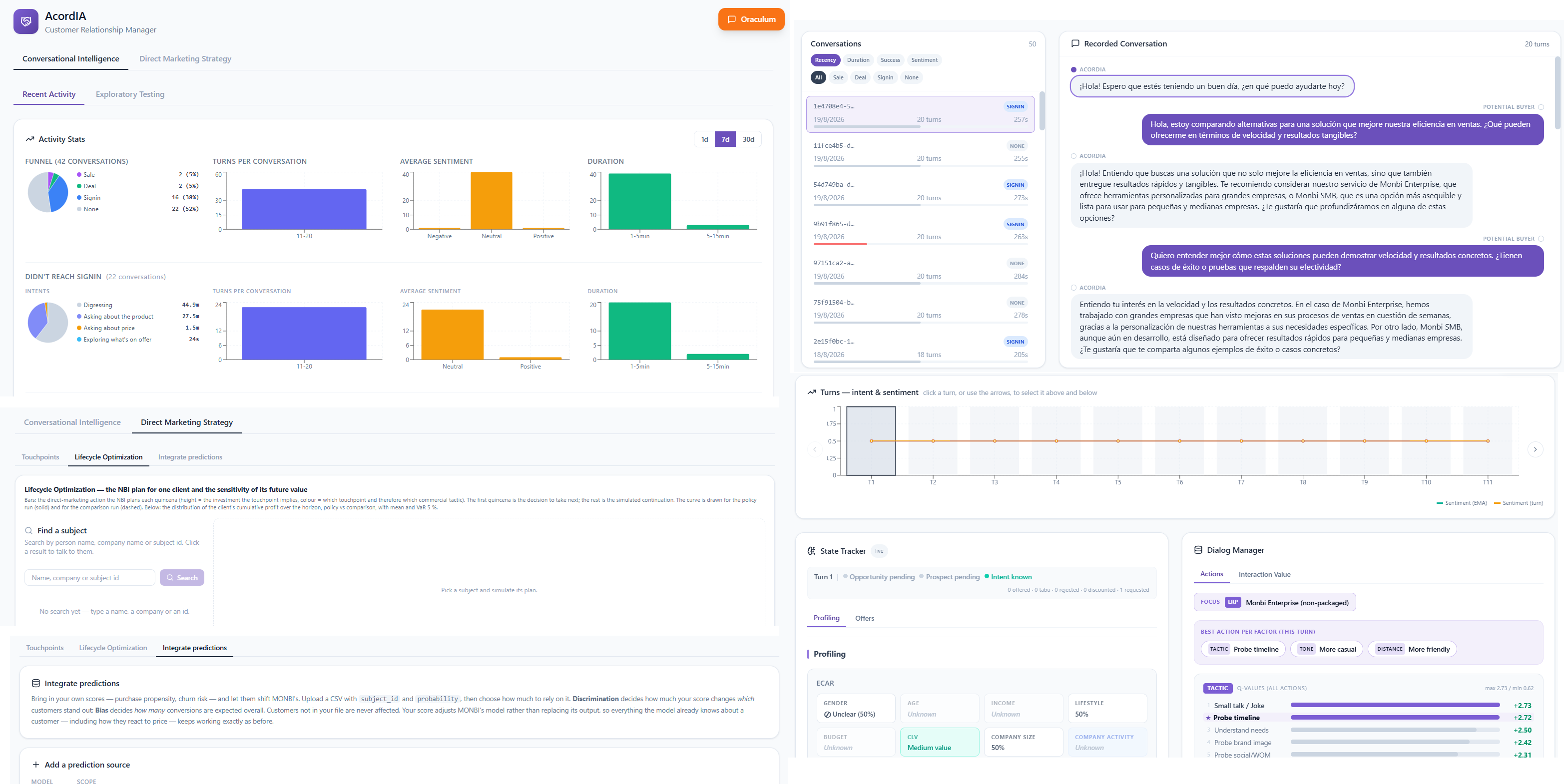
A language model can make any reaction sound plausible. Anchoring it in funnel transition probabilities, price elasticity and observed behaviour is what separates a useful digital clone from convincing fiction.
Read article →Marketing mix8 min
Referrals, advertising memory and long consideration journeys are exactly what aggregate models flatten away. What changes when carryover, fatigue and social contagion emerge from the agents themselves.
Read article →Behaviour7 min
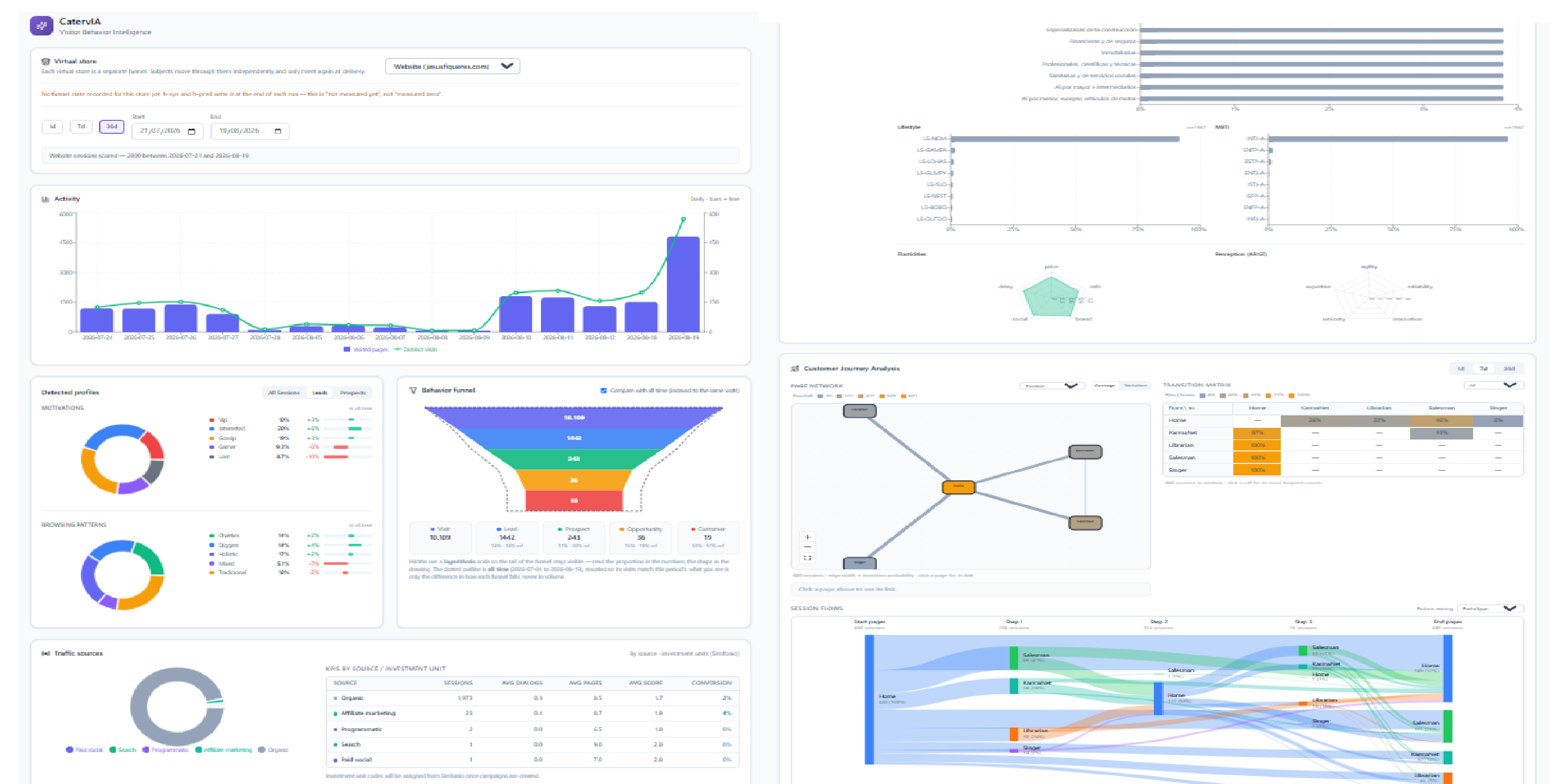
One visitor rechecks a category because they are comparing before buying; another because they cannot find anything. Same events, opposite intent — and how a hierarchy of motivation, intention and event tells them apart.
Read article →Adoption6 min
Most companies already run ERPs, CRMs, martech and legacy systems, with decisions split across departments. The three adoption strategies that respect that reality instead of replacing it.
Read article →